
Chaplet of St Michael
A simple guide to praying the Chaplet of St Michael with reverence, using a physical chaplet to stay focused, recollected, and close to the angels in the middle of ordinary life.
For many Catholics, the Chaplet of St Michael is not something loud or dramatic. It is a quiet devotion that slips into the early morning before the house wakes up, or into the last minutes before sleep. Holding the beads, repeating the prayers, and asking the holy angels to watch over us can bring a simple steadiness to the day.
I remember the first time I prayed this chaplet with an actual set of beads instead of just reading from a screen. The rhythm felt different. The weight of the chaplet in my hand reminded me that I was not just saying words; I was turning to God with the help of St Michael and the nine choirs of angels, asking for protection, guidance, and a more faithful heart, one small step at a time.
A dedicated chaplet is not required to pray this devotion, but it often helps. Just like a regular rosary, the beads give structure to the prayer and gently bring the mind back whenever it starts to wander. Many Catholics keep their chaplet near their bed, in a purse, or in the car, so that this devotion can quietly fit into the real flow of family life, work, and all the little worries that come with them.
Over time, the chaplet can become familiar, like a trusted path you walk again and again. Some nights I only manage a part of it before I fall asleep, and that is fine. The point is not finishing quickly or perfectly, but turning to God with steady, honest prayer, entrusting ourselves and our loved ones to the care of the holy angels.
What the Chaplet of St Michael Is in Daily Life
In simple terms, the chaplet is a way of honoring St Michael the Archangel and the whole angelic world that God created. It is made up of specific prayers offered in honor of the nine choirs of angels, followed by a closing set of prayers to St Michael, St Gabriel, St Raphael, and our own Guardian Angels. There is a clear structure, but the heart of it is very down-to-earth: asking for help to live faithfully in the middle of ordinary struggles and responsibilities.
Many people first hear about this devotion during times of anxiety, confusion, or spiritual heaviness. The idea of turning specifically to St Michael, so closely connected with spiritual protection, can feel like a steadying hand on the shoulder. When I first began to pray the chaplet regularly, I did not feel anything special or dramatic. What I noticed instead was a quiet habit forming: before tough meetings, before driving at night, or when one of our kids was going through a hard season, I would naturally reach for the chaplet.
Traditionally, the chaplet is prayed using a particular sequence of beads. Some Catholics use a regular rosary and adapt the prayers, but a dedicated chaplet can make it easier to stay on track without counting in your head. The physical design may vary, but the devotion itself remains the same: a step-by-step turning of the heart to God with the help of His angels.
If you are curious about the story and tradition behind St Michael, the article on St Michael the Archangel gives a broad overview. Even just reading about the long history of this devotion in the Church can help you feel connected to generations of believers who turned to St Michael in their own uncertain times.
How a Physical Chaplet Supports Prayer
A dedicated Chaplet of St Michael is, first of all, a tool for prayer. It is not a charm or a guarantee of anything, and it does not replace the sacraments or the basic duties of Christian life. Instead, it quietly supports what is already there: the desire to pray, to remember God in the middle of a busy day, and to bring worries and fears into His presence.
In my own routine, the chaplet sits on my nightstand. On some mornings, I wake up a little earlier than everyone else, make coffee, and sit in the dim light with the beads in my hands. The structure of the chaplet helps when I do not know what to say or how to begin. Each group of prayers feels like a small step forward, offered calmly, without rushing.
For others, the chaplet lives in the car console, ready for a long commute or a waiting line in school pickup. It can be prayed all at once or spread throughout the day, a few choirs of angels at a time. What matters is the intention: turning the heart toward God and asking for His light, especially in places that feel dark or confusing.
Having a physical chaplet also makes it easier to invite others into the devotion. A child who sees a parent quietly moving from bead to bead learns, without many words, that prayer has a real place in family life. A friend going through a painful time might welcome an invitation to pray a portion of the chaplet together, even if all you do is sit in silence between the prayers.
Design Details That Matter in Prayer
When choosing a chaplet, Catholics often look at practical details rather than appearance alone. Durability is important, especially if you plan to keep it in a pocket, purse, or car. Securely linked beads, a sturdy center medal, and a strong crucifix help ensure that the chaplet can handle daily use without easily tangling or breaking.
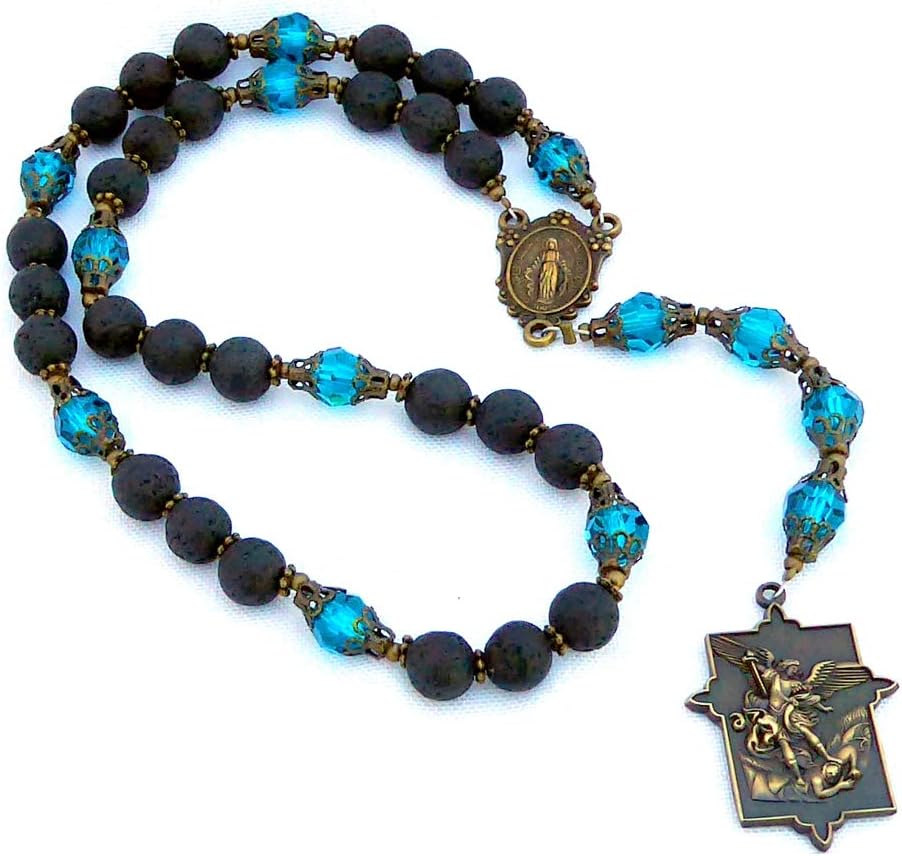
Bead size also matters more than many people expect. Smaller beads can feel delicate and are easy to carry, but they may be harder to handle for older hands or when you are praying in the dark. Medium to larger beads give a more solid sense of movement from one prayer to the next and can make it easier to stay focused if you are tired or distracted.


The images above give a sense of how a chaplet can vary in style while still keeping the same basic layout: groupings of beads for each choir of angels, often marked by a slightly different bead or medal, and a crucifix or medal of St Michael at the end. Some designs are more ornate, others are very simple. Both can serve prayer well. It usually comes down to what quietly draws your heart without distracting you.
Over time, a chaplet often picks up a “personality” of its own in your life. Scratches on the crucifix, a slightly loosened chain, or a bit of wear on the beads can become reminders of specific seasons: a sick relative you prayed for, a hard decision you brought before God, or quiet evenings when words were few but the beads kept your hands anchored.
Praying the Chaplet of St Michael Step by Step
If you have never prayed the chaplet before, the structure may feel a little unfamiliar at first. After a few times, it usually becomes natural. The basic pattern includes an opening set of prayers, followed by nine groups of prayers honoring each choir of angels, ending with a short conclusion. There are many printed and online guides that list the exact words and order.
A helpful approach is to move slowly at the beginning. Do not worry about speed or getting everything perfectly right the first time. You might choose one time of day to practice the devotion for a week or two, just to get used to the rhythm. Morning is good for some; late evening feels better for others. I found that praying it quietly after everyone else had gone to bed helped me to unwind and hand the whole day back to God.
As you move from one choir of angels to the next, you might pause briefly to bring to mind particular people or intentions: your children, your parents, your parish, the sick, those who have died, or areas of your life that feel especially fragile. Again, the chaplet is not a formula or a guarantee of certain outcomes. It is a simple way of bringing your needs and the needs of others into the light of God, asking the angels’ help as you do.


One small practice that has helped me is to begin the chaplet by quietly asking for the grace simply to be honest with God. On stressful days, my mind jumps all over the place, and I am tempted to give up halfway through. Instead of forcing it, I try to bring that restlessness into the prayer itself, asking St Michael and the angels to guard my thoughts and to keep my heart turned toward what matters most.
When the chaplet becomes part of your regular routine, even if only once a week, it can serve as a gentle reminder that there is more to reality than what we can see and measure. The presence of the angels, and especially the guardianship of St Michael, encourages us to remember that God is at work even when we feel small, confused, or tired.
Personal Ways to Integrate the Chaplet into Your Day
Every household and schedule is different, so there is no single “right” way to fit the Chaplet of St Michael into your life. Some families choose to pray it together on certain feast days or during particular seasons, like during times of national crisis or after a tragedy. Others prefer to keep it as a very private devotion, prayed quietly on a walk, in a chapel, or before bed.
In our home, the chaplet tends to appear more during unsettled periods: when someone is sick, when finances are tight, or when a child is struggling with anxiety. Instead of trying to fix everything by ourselves, we bring those concerns into prayer and ask for the angels’ protection and guidance. Sometimes we pray the full chaplet; sometimes we only manage a few parts. It is not about perfection but about staying turned toward God.
You might choose to keep your chaplet in a small pouch with a holy card or a short printed guide to the prayers. That way, if you find yourself unexpectedly waiting—at the doctor’s office, in an airport, or in a long line—you can use that time for quiet prayer instead of scrolling your phone. A few decades prayed slowly can calm the heart more than we often expect.
Another possibility is to mark certain days of the week as “angel days” in your own mind, perhaps on Mondays or Fridays, when you deliberately reach for the chaplet. Simple habits like this can anchor your week and remind you that you are not facing things alone, even when circumstances feel heavy.
Frequently Asked Questions about the Chaplet of St Michael
1. Do I need a special chaplet to pray the Chaplet of St Michael?
No, a special set of beads is not strictly necessary. You can pray the chaplet using a printed guide or even count on your fingers. However, many Catholics find that a dedicated chaplet makes it easier to stay focused and remember where they are in the sequence of prayers. The physical beads also serve as a reminder to pray when you see or touch them during the day.
2. When is a good time of day to pray this chaplet?
The chaplet can be prayed at any time. Some people prefer mornings, offering the day to God under the protection of St Michael and the angels. Others pray it in the evening to hand over the day’s worries before sleep. It can also be meaningful before difficult events—medical appointments, important conversations, or times of travel—bringing those moments directly into prayer.
3. How long does it usually take to pray the Chaplet of St Michael?
The time can vary depending on your pace and whether you pray it alone or with others. Many people find that it takes about 15 to 25 minutes. There is no need to rush. In fact, a slower, more deliberate pace often allows the heart to settle and the mind to stay attentive, especially when life feels busy or scattered.
4. Can I pray the chaplet even if I am distracted or tired?
Yes. Distraction and fatigue are a normal part of real life, and they do not disqualify our prayer. On difficult days, you might simply tell God honestly that you are tired, and then begin the chaplet anyway, moving gently from bead to bead. If your mind wanders, you can bring it back quietly and continue. Over time, the regular habit of prayer often helps the heart grow more peaceful, even if each individual day feels imperfect.
5. Is it better to pray the chaplet alone or with others?
Both ways can be good. Praying alone allows for deeper silence and a very personal conversation with God. Praying with others—spouse, children, friends, or parish groups—can create a sense of shared trust and support. In my own life, I have found that even praying part of the chaplet with a family member during a hard time brings a kind of quiet solidarity, reminding us that we are carrying our concerns together before God.