
When most people hear the word chaplet, they think of beads and prayers said in a certain order. That is true, but in daily life a chaplet becomes much more than a list of beads. It turns into something familiar that your fingers recognize even in the dark, a quiet way to bring your thoughts back to God while standing in line, waiting in the car, or settling down after a long day.
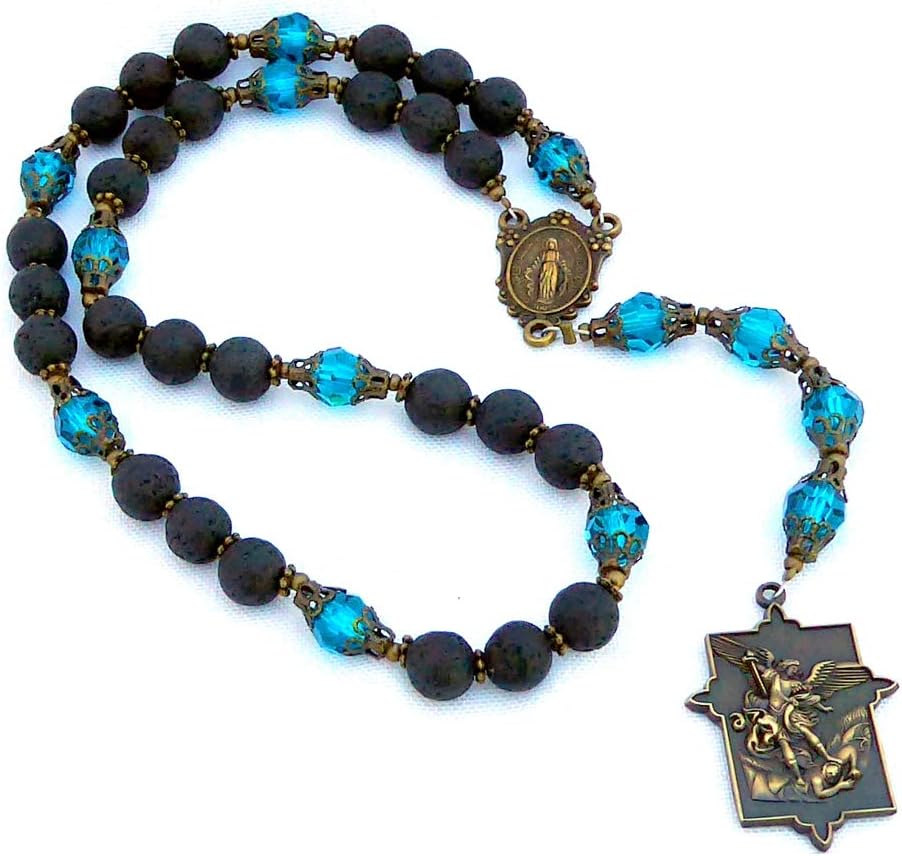
I still remember the first chaplet I kept on my key ring. It was simple and a little worn, but it changed how I moved through my day. When I reached for my keys, I would feel the beads and quietly whisper a short prayer. It was not dramatic or emotional. It was just a steady reminder that God was part of my errands, my commute, and my ordinary routines.
That is what I like about a chaplet. It does not demand attention. It simply waits, ready whenever we are, whether for a full set of prayers or just a single, honest sentence offered to God in the middle of everything else.
What a Chaplet Is in Everyday Catholic Life
In simple terms, a chaplet is a set of beads used for particular prayers. Different chaplets focus on different devotions: some honor the Divine Mercy, some focus on the Holy Spirit, some remember certain mysteries or saints. On the outside they may look similar to a rosary, but often they have a different number or arrangement of beads.
In everyday life, though, the most important thing about a chaplet is not the exact number of beads, but the space it makes for prayer. It gives your hands something steady to hold while your mind and heart gently turn toward God. For people who get distracted easily, the simple act of moving bead by bead can make a big difference.
Over time, a chaplet tends to pick up the story of the person who uses it. Beads may smooth from use. A cord might fray slightly. A metal finish may darken in spots. All of this can remind us that our prayer life does not need to look perfect. It just needs to be real, steady, and sincere.
Keeping a Chaplet Close During the Day
Many Catholics I know do not keep their chaplet tucked away in a drawer. They keep it where it can actually be used: in a coat pocket, beside their phone, in a car console, or in a small pouch that goes with them everywhere. When a chaplet is close at hand, prayer naturally spills into the small spaces of the day.
For example, I often keep a chaplet in the car. When I pull into a parking spot a few minutes early, instead of scrolling through my phone, I might pray a short chaplet or even just part of one. I do not always finish. Sometimes it is just a few beads and a quiet “Lord, help me to be patient today.” But even that short moment changes how I enter the store, the workplace, or the appointment ahead.

At home, a chaplet can rest quietly on a nightstand or near a favorite chair. Having it in sight is a gentle reminder without pressure. Some evenings I pick up my chaplet and pray slowly, bead by bead. Other nights, I simply hold it for a moment and whisper, “Lord, you know how tired I am,” and that is enough. The chaplet becomes a kind of familiar language between me and God, even when the words are few.
Different Styles of Chaplet for Different People
Chaplets come in many forms: wooden beads, glass beads, metal chains, knotted cords, and more. Some feel more traditional, with crucifixes and medals. Others are simple and understated. None of these choices make the prayer better or worse. They just shape how the chaplet fits into a person’s daily life.
A sturdy, compact chaplet can be good for people who travel, commute, or keep it in a bag or pocket. A more delicate or ornate chaplet might stay at home near a prayer corner or a bedside table. Some people appreciate designs that remind them of a specific devotion, like Divine Mercy colors or a medal of a favorite saint. Others prefer a very simple look that blends in quietly.

Over the years, I have used several different chaplets. One was a small, dark wooden one that I carried for years until the string finally wore through. Another was a gift with glass beads that caught the light on the kitchen table. I noticed that I prayed with each one a little differently. The wooden chaplet lived in my pocket and helped me through stressful days. The glass one tended to stay near where I had my morning coffee and became part of a slower, more reflective time of prayer.
Praying with a Chaplet Without Pressure
Some people hesitate to start using a chaplet because they worry they will not “do it right” or keep up a perfect routine. In my experience, it helps to remember that God is not measuring our performance. The beads are simply a tool that can guide our attention and help us stay present.
You might begin by learning the prayers of a particular chaplet and trying to say them once a day. But if life gets hectic and you miss a day—or many days—that does not make the chaplet any less meaningful. It is still there when you are ready again. Sometimes, just holding it quietly can be a prayer all by itself.

There have been evenings when I sat down with my chaplet and felt scattered, distracted, or worried. On those nights, I sometimes move from bead to bead more slowly, almost like taking a deep breath with each one. The exact number of prayers feels less important than the simple act of turning my thoughts toward God and trusting that He understands the rest.
Chaplet as a Gentle Reminder of God’s Presence
A chaplet can also serve as a quiet reminder that God is present in everyday places. When it hangs from a car mirror, rests on a desk, or peeks out of a jacket pocket, it can nudge us back toward prayer during ordinary tasks: folding laundry, waiting on hold, or walking the dog.
Once, during a difficult season at work, I kept my chaplet in my desk drawer. Before a tough meeting, I would open the drawer, touch the beads for just a moment, and ask God for patience and kindness. No one else knew. It was a small, hidden habit, but it helped me remember that my faith was not separate from my workday. It was part of how I tried to show up for others.

Chaplets can also become part of small family routines. Some families pray a chaplet together on certain days of the week, or during particular seasons like Lent. Others keep one near a family picture and pause there from time to time to pray for loved ones. The beads can become a simple way of saying, “We are holding each other before God,” even when everyone’s schedules are busy and scattered.
Choosing a Chaplet That Fits Your Life
When thinking about a chaplet for yourself or someone else, it can help to picture where it will actually live and how it will most often be used. That simple question often guides the choice more than anything else.
If you tend to pray while walking or commuting, a chaplet that is sturdy and easy to hold might fit best. If you prefer quiet prayer in the evening, something a bit more delicate or reflective could feel right beside a bedside lamp or a favorite chair. Some people like darker, more subtle colors for everyday use. Others are drawn to brighter beads that stand out and remind them of joy and hope.

I have found that the chaplet that “fits” me best is the one I forget about until I need it, and then suddenly find in my pocket or bag. It is not flashy or fragile. It is just there, ready when I reach for it—during a hospital visit, a long wait in the emergency room, or a restless night when words are hard to find.
Chaplet in Times of Joy and Sorrow
Chaplets can also be part of how we carry both gratitude and grief. In moments of joy, moving along the beads can be a way of saying thank you for specific blessings—a safe trip, good news from a doctor, a long‑prayed‑for answer. In times of loss or confusion, the same beads can hold our questions, our tears, and our silence.
I remember sitting in a hospital waiting room once, chaplet in hand, while a family member was in surgery. I did not follow every prayer perfectly that day. Sometimes I just repeated a short phrase over and over, clinging to the beads like a lifeline. Looking back, I do not think God was counting prayers. I think He was simply close, as He always is, and the chaplet helped me lean into that nearness when I felt overwhelmed.

In seasons of grief, a chaplet can be something to hold when words run out. It can rest in a pocket at a funeral, or on a nightstand in the weeks that follow. There is no need to force long, complicated prayers. Often, one or two simple phrases repeated on the beads are all that the heart can manage, and that is entirely enough.
Caring for a Chaplet with Respect
Because a chaplet is used for prayer, many Catholics treat it with a quiet respect. That does not mean it must be handled perfectly, but it does mean being mindful. Some people like to have their chaplets blessed by a priest, especially if they will be using them regularly or giving them as gifts.
Practical care can be simple: avoid leaving a chaplet where it will get tangled or crushed, keep it away from harsh chemicals, and store it in a small pouch or box if it is especially delicate. If a cord wears out or a ring opens, it is okay to repair or replace the chaplet. The important thing is not the exact object, but the prayer it has supported.

When a chaplet finally wears out beyond repair, some people choose to keep part of it—perhaps a medal or crucifix—as a reminder of the prayers it carried. Others quietly dispose of it in a respectful way, grateful for the years of gentle help it gave them in staying close to God through ordinary and extraordinary days.
Chaplet FAQs
1. How is a chaplet different from a rosary?
A rosary is a specific set of prayers with a fixed number of beads and decades. A chaplet, on the other hand, is any bead‑based devotion with its own set of prayers and structure. Some chaplets look very similar to a rosary, while others have fewer beads or a different layout. In daily life, both rosaries and chaplets serve the same basic purpose: they give our hands something steady to hold while our hearts and minds turn toward God.
2. Do I need to pray an entire chaplet at once?
No. Many people pray a chaplet in parts, fitting it into the day as they are able. You might pray a section in the morning, another while waiting in the car, and the rest before bed. Some days you may not finish, and that is all right. The goal is not to complete a task perfectly, but to keep returning to God with sincerity, even in small moments.
3. Is it better to have a fancy or a simple chaplet?
What matters most is whether the chaplet helps you pray. A simple, sturdy chaplet that lives in your pocket may serve you better than an ornate one that feels too delicate to handle. At the same time, a more beautiful chaplet can lift the heart and draw you to prayer when you see it waiting by your bedside or prayer corner. It often comes down to your personality, your habits, and what feels natural in your daily life.
4. Can a chaplet be a meaningful gift?
Yes, many Catholics quietly give chaplets for occasions like confirmations, anniversaries, graduations, or times of illness or grief. A chaplet given with love can say, “I am praying for you, and I hope this helps you pray too.” It does not need to come with pressure or expectations. Often, just knowing the chaplet was chosen thoughtfully is a comfort in itself.
5. What if I forget the prayers or make mistakes?
It is very common to forget the exact words or order, especially when first learning a new chaplet. Many people keep a small card or note with the prayers, or look them up on a phone when needed. If you lose your place or make a mistake, you can simply continue as best you can. God is not waiting for flawless recitation. He receives even our imperfect, stumbling prayers with understanding and mercy.
If you feel drawn to make a chaplet part of your daily rhythm, you might take a quiet moment to explore different options and see which one fits your life and your way of praying.
Let me see more