
Chaplet of the Holy Face
Chaplet of The Holy Face
The Chaplet of the Holy Face is a simple way to stand quietly before the suffering face of Christ, especially in times when words are hard to find. Many Catholics use this chaplet to pray in reparation, to keep company with the Lord in His Passion, or simply to rest their hearts in His presence after a long day. It is not complicated, and it does not demand a perfect prayer life. It is just a gentle path that helps us look toward Him with love.
I remember the first time I held a Chaplet of the Holy Face in my hands. I had been feeling worn out and distracted in prayer. The specific prayers of this chaplet gave me a small structure to hold onto, like a handrail on a staircase. As I moved bead by bead, the focus slowly shifted from my tangled worries to the face of Jesus, humiliated and yet deeply loving. Nothing dramatic happened, but there was a quiet steadiness that stayed with me through the rest of the week.
This page contains affiliate links. If you click and buy, I may earn a commission at no extra cost to you.
Let me look closerWhat Is the Chaplet of the Holy Face?
The Chaplet of the Holy Face is a set of prayers prayed on beads, honoring the face of Jesus, especially as it was bruised, spat upon, and disfigured during His Passion. It is linked to a devotion that grew in the 19th century in France, connected in particular with the Holy Face of Jesus. Over time, Catholics around the world have quietly taken up this chaplet in their homes, parishes, and small prayer groups.
Unlike some devotions that feel complicated or demanding, this chaplet is very simple. It usually includes a crucifix, a centerpiece with the Holy Face, and beads arranged for an introductory set of prayers and several decades. The rhythm of the repeated invocations, often focused on reparation and love for the Lord, can calm the mind and steady the heart. There is no need for special knowledge; a small prayer card or booklet is enough to guide anyone through it.
For many of us, the strongest appeal of the Chaplet of the Holy Face is how quietly it fits into daily Catholic life. It does not push itself forward. It simply waits in a pocket, beside a bed, or in a small drawer, ready to be picked up when we feel moved to share a moment of prayer with Christ in His suffering.
How the Chaplet Fits into Everyday Catholic Life
In ordinary American Catholic households, days can be loud and rushed: traffic, school, work, screens, and constant notifications. Many of us try to pray, but we often end up with only a few quiet minutes here and there. The Chaplet of the Holy Face can fit naturally into those short spaces, without pressure or guilt.
Some Catholics like to keep their chaplet:
- On a nightstand, to pray a decade or two before sleep.
- In a coat pocket, to hold during a walk or while waiting in the car.
- Near a favorite chair, as part of an evening prayer routine.
- In a small pouch inside a purse or backpack for adoration visits.
- By a home prayer corner with a crucifix and a candle.
When I first started using my Chaplet of the Holy Face, I would often reach for it late at night when anxiety was high and my thoughts were scattered. I did not always finish the full set of prayers. Sometimes I managed only a few invocations before growing tired. Still, those few beads offered a small way of saying, “Lord, I am here with You,” even when my mind was not very collected. Over time, that simple habit became something I quietly looked forward to.
The chaplet can also be a help for parents, especially when schedules leave little time for long devotions. Even one short decade prayed while sitting beside a child who has fallen asleep can become a hidden offering, entrusted to the Lord without any big plans or expectations.
Praying with Reverence and Simplicity
The most important part of using a Chaplet of the Holy Face is not getting every word word-perfect, but approaching the Lord with sincerity and reverence. Many Catholics like to:
- Begin with a slow, quiet sign of the cross.
- Take a brief moment of silence before starting the prayers.
- Offer the chaplet for a particular intention, such as reparation, family needs, or the Church.
- Move through the beads slowly, paying more attention to the Lord than to their own feelings.
- End in silence again, letting the final prayer rest quietly in the heart.
The Chaplet of the Holy Face is often associated with prayers of reparation. That word can sound heavy, but in everyday life it often means simply standing with Jesus, especially where He is forgotten or dishonored. Some people might offer their chaplet for places where the faith has grown cold, for suffering members of the Church, or for wounds in their own family history.
I have found that on days when the news feels especially heavy or the world seems harsh, this chaplet becomes a small, concrete way to answer that feeling of helplessness. I cannot fix everything I see, but I can at least turn my attention toward His face, marked by suffering yet full of patience. That quiet turning, even for just ten minutes, brings a more sober peace than anything I find by scrolling through social media.
Design Details that Support Prayer
While the spiritual value of any chaplet does not come from the materials, certain design details can make it easier to use regularly. When people choose a Chaplet of the Holy Face, they often look for features that fit their way of praying:
- Size and weight: A chaplet that is too small can be hard to handle; one that is too large may feel awkward in a pocket. Many people prefer a medium size that rests comfortably in the hand.
- Bead texture: Slightly raised or faceted beads give the fingers a gentle grip, which can help keep focus during the prayers.
- Sturdy construction: Strong links or cord help the chaplet withstand regular use, especially if carried daily.
- Clear crucifix and medal: A crucifix with a visible corpus and a distinct Holy Face medal can help focus the gaze and intention.
- Subtle appearance: Some prefer muted colors or classic metal finishes that do not draw attention in public spaces.
The Chaplet of the Holy Face I use most often has beads that feel cool at first touch, then gently warm in my hand as I pray. That small physical change has become a reminder to me that prayer is not just an idea; it involves my whole self, including my body and my senses. The weight of the crucifix, the texture of the beads, even the soft clinking sound when I place it on a table—all of it helps draw me into a more recollected state.
Different Styles of the Holy Face Chaplet
There is no single “perfect” Chaplet of the Holy Face. Catholics quietly choose different styles based on their personal taste, needs, and circumstances. Below are some types that many people find suitable for various situations.


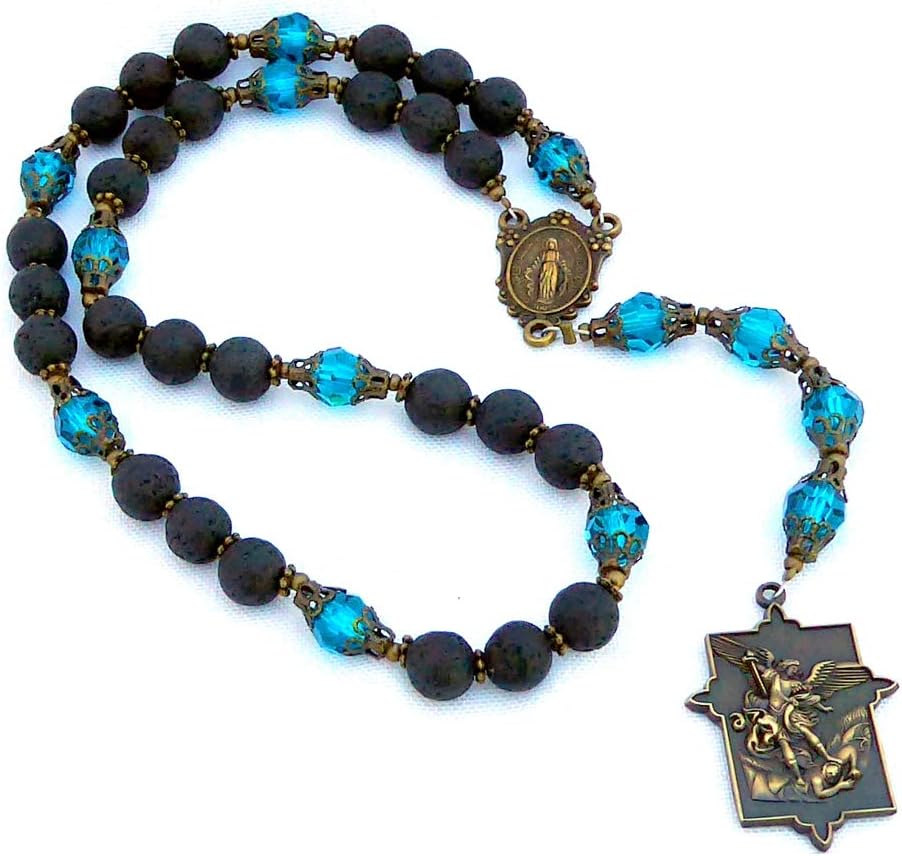
Some chaplets have darker, more muted beads, which can feel fitting for the themes of reparation and silence; others include lighter stones or gentle colors that speak to the hope that comes even through suffering. Some have a more traditional look, with metal chain and classic medals, while others use cord or simpler materials that are a bit more durable for daily carrying.
Over time, a particular Chaplet of the Holy Face can start to feel very personal. The small marks that appear on the metal, the places where the finish has worn a bit from frequent use, and even the way it naturally rests in the hand can all become reminders of prayers offered through seasons of life. Many Catholics quietly treasure these objects not as good luck charms or guarantees, but as companions on the road of faith.
Using the Chaplet in Family and Parish Life
The Chaplet of the Holy Face can also find a place beyond individual prayer. In some homes, family members pray it together on Fridays, especially during Lent, as a simple way to keep the Passion of Christ close to daily life. Children might not follow every word of the prayers, but they often understand the basic idea of offering love to Jesus in His suffering.
In parish settings, small groups sometimes gather to pray this chaplet before or after Mass, or during times of Eucharistic adoration. Because the prayers are usually printed on a card or small booklet, newcomers can easily join in without prior experience. It can be comforting for people to hear others praying the same words, especially when carrying heavy burdens or concerns.
I once joined a small group that met quietly in a side chapel after a weekday Mass to pray the Chaplet of the Holy Face together. There was nothing dramatic about it: a few people, some worn prayer cards, the flicker of votive candles near an image of the Lord’s face. But there was a deep sense of shared intention. Each person had different worries and hopes, but we were united in turning toward the same suffering and loving face of Christ.
Frequently Asked Questions about the Chaplet of the Holy Face
1. Is the Chaplet of the Holy Face hard to learn?
Most people find it fairly simple once they have prayed it a few times. The structure is clear, and many chaplets come with a small card that lists the prayers in order. Some Catholics start by praying just part of the chaplet until they feel more comfortable, then gradually add the rest as they become familiar with the pattern.
2. When is a good time of day to pray this chaplet?
There is no single “best” time. Many people choose early morning, before the household wakes up, or later in the evening when things grow quiet. Others use the Chaplet of the Holy Face during Eucharistic adoration, on Fridays, or during Lent. Some simply pick it up whenever a strong need for prayer arises, such as after receiving difficult news or returning from a stressful day at work.
3. Can I pray the Chaplet of the Holy Face together with the Rosary?
Yes, some Catholics like to combine the two in their personal prayer time, though there is no obligation to do so. A person might, for example, pray the Rosary first and then follow it with the Chaplet of the Holy Face, or alternate them on different days. It is important not to rush or feel pressured to “fit everything in,” but to let the prayers serve a deeper relationship with Christ.
4. What if I get distracted or feel nothing while praying this chaplet?
Distractions and dryness in prayer are very common and do not mean that the chaplet is failing or that God is absent. Many Catholics simply acknowledge their distractions gently and return their attention to the beads and the words at hand. The Chaplet of the Holy Face can actually be helpful here, because its regular rhythm gives the mind something steady to hold whenever it wanders.
5. Is it okay to carry the Chaplet of the Holy Face in public places?
Yes, many people carry this chaplet in pockets, purses, or backpacks and sometimes hold it discreetly while traveling, walking, or sitting in waiting rooms. There is no requirement to be noticed or to pray out loud. A quiet, hidden chaplet can be a simple reminder that Christ’s suffering love is present even in ordinary public spaces like buses, offices, and hospital corridors.